Brewing Ratios for Every Method: Drip, Pour Over & More
A complete reference for coffee-to-water ratios across 10 brew methods. Exact numbers, why they differ, and how to get them right every time.
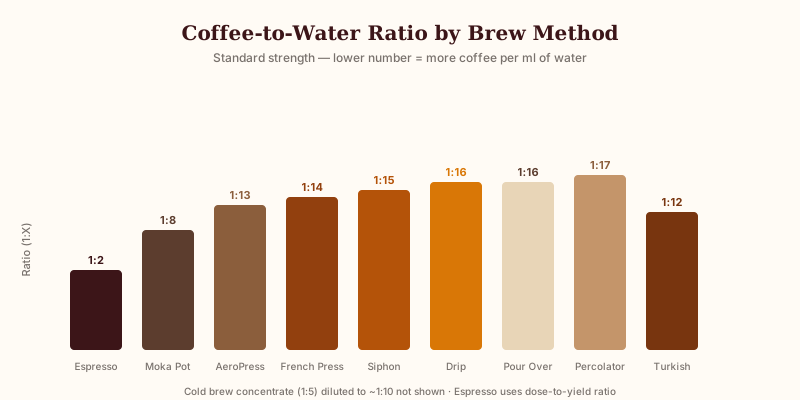
There's no single "correct" coffee ratio. Each brew method has its own optimal range, shaped by the physics of how it extracts flavor from coffee grounds. A pour over and a French press aren't just different equipment — they interact with coffee differently, which is why they need different ratios.
This is the reference you want open when you're setting up a new brew method or dialing in a recipe. For specific water amounts, use our [coffee ratio calculator](/) to get exact gram measurements.
Why Ratios Differ Between Methods
Three variables drive the difference: contact time, pressure, and grind surface area.
**Contact time** is how long water and coffee grounds are in contact. French press steeps for 4 full minutes. Espresso extracts in 25–30 seconds. Longer contact means more extraction at the same grind size — which is why French press uses a heavier ratio despite its coarse grind.
**Pressure** affects extraction efficiency. Espresso machines operate at 9 bars of pressure, which forces water through grounds extremely efficiently. This is why espresso uses a 1:2 ratio while drip coffee uses 1:16 — the same amount of coffee produces far more dissolved solids under pressure.
**Grind surface area** determines how much of the coffee's surface is exposed to water. A fine grind (espresso) has vastly more surface area than a coarse grind (French press), extracting faster at the same temperature and pressure.
These three factors interact. Change any one of them and your optimal ratio shifts.
The Ratios: Method by Method
Drip / Filter Coffee
**Standard ratio: 1:16**
(Light: 1:18, Strong: 1:14, Extra Strong: 1:12)
Drip is the baseline for the Specialty Coffee Association's Golden Cup Standard. The SCA recommends 55g per liter (1:18.2) as the theoretical midpoint, but most specialty cafés brew at 1:16 to 1:15 because lighter roasts need a slightly heavier dose to extract properly.
Your drip machine controls temperature and contact time for you. The only variable you control is the ratio. Start at 1:16 and adjust from there.
Pour Over (V60, Chemex, Kalita Wave)
**Standard ratio: 1:16**
(Light: 1:18, Strong: 1:14)
Pour over uses the same ratio range as drip, but you have full control over every step. The most important technique difference: the bloom. Pour about twice the coffee weight in water (for 22g of coffee, pour ~44ml), wait 30 seconds for CO₂ to escape, then pour the rest. The bloom improves extraction evenness.
V60 brews faster than Chemex because the V60 filter is thinner. If you're switching between them, you might need to adjust grind slightly — same ratio, different grind — to hit a similar brew time (around 3–3.5 minutes total for both).
Use our [pour over ratio calculator](/coffee-ratio-calculator/pour-over) for specific water amounts.
French Press
**Standard ratio: 1:14**
(Light: 1:16, Strong: 1:12, Extra Strong: 1:10)
French press is full-immersion. Grounds sit in water for the entire brew (typically 4 minutes), extracting continuously. The coarse grind used (sea salt texture) slows extraction, which is why a heavier ratio works here — the slower extraction rate of the coarse grind is compensated by using more coffee.
The critical step many people miss: pour immediately after pressing. Leaving the pressed coffee sitting on the grounds continues extraction and turns bitter in 3–5 minutes. Press, pour, done.
Our [French press ratio calculator](/coffee-ratio-calculator/french-press) handles the math for any press size.
AeroPress
**Standard ratio: 1:13**
(Light: 1:16, Strong: 1:10, Extra Strong: 1:8)
AeroPress is the most versatile method on this list. You can brew it anywhere from 1:4 (espresso-style concentrate) to 1:18 (light filter-style). The standard 1:13 is a middle-ground that works well with medium-fine grind and 1–2 minutes of brew time.
The inverted method gives you more control over steeping time — you brew with the cap off the bottom and flip before pressing. It's worth trying if you want a bolder extraction.
Espresso
**Standard yield ratio: 1:2**
(Ristretto: 1:1.5, Standard: 1:2, Lungo: 1:3)
Espresso is different from every other method. The ratio measures **grounds in to liquid espresso out** — not water volume. An 18g dose at 1:2 yields 36g of liquid espresso. This is called the dose-to-yield ratio.
The machine pushes significantly more water through the puck (around 50–60g), but the grounds absorb most of it. The 36g you drink is the yield.
Grind size is the primary control for espresso. Finer = slower flow = more extraction = stronger. Coarser = faster flow = less extraction. You target a yield time of about 25–30 seconds for a 1:2 ratio.
Use our [espresso ratio calculator](/coffee-ratio-calculator/espresso) for dose-to-yield calculations.
Cold Brew Concentrate
**Standard ratio: 1:5**
(Light: 1:6, Strong: 1:4, Extra Strong: 1:3)
Cold water is roughly 10x less efficient at extracting coffee than hot water. To compensate, cold brew uses a much heavier ratio and much more time (12–24 hours).
The result is a concentrate. You dilute it 1:1 with water or milk before drinking, giving an effective final ratio of about 1:10. If you prefer drinking it straight without dilution, use the Ready-to-Drink setting (1:8 to 1:12).
Steep in the refrigerator for 18–24 hours, or at room temperature for 12–18 hours. The fridge takes longer but produces a cleaner, less astringent result.
Our [cold brew ratio calculator](/coffee-ratio-calculator/cold-brew) handles both concentrate and ready-to-drink styles.
Moka Pot
**Standard ratio: 1:8**
(Light: 1:10, Strong: 1:7, Extra Strong: 1:6)
The Moka pot brews under steam pressure (about 1.5–2 bars, much less than an espresso machine). Fill the bottom chamber to just below the safety valve with hot water. Fill the basket level — don't tamp, just level. Medium heat until you hear the sputtering sound, then remove immediately.
The resulting brew is strong and concentrated — drink it straight, cut it with water (like an Americano), or use it as a base for milk drinks.
Turkish Coffee
**Standard ratio: 1:12**
(Light: 1:14, Strong: 1:10, Extra Strong: 1:8)
Turkish coffee is made by simmering extra-fine ground coffee (almost flour-like texture) together with water in a cezve (small copper pot). Don't stir after the initial mixing. Bring to a near-boil twice — removing from heat each time the foam rises — then pour carefully to allow grounds to settle.
No filter is used. The grounds sit in the cup and settle as you drink. Don't drain the cup completely.
Siphon / Vacuum Pot
**Standard ratio: 1:15**
(Light: 1:17, Strong: 1:13)
Siphon brewing uses vapor pressure and vacuum to move water between chambers. It produces a clean, clear cup similar to pour over but with a distinctive presentation. Brew time is about 1 minute after the water rises to the upper chamber.
Percolator
**Standard ratio: 1:17**
(Light: 1:20, Strong: 1:14)
Percolators cycle hot water repeatedly through coffee grounds. This prolonged heat exposure is why percolators benefit from a coarser grind and a lighter ratio — over-extraction is easy. Use the lightest ratio setting if your percolator has a tendency toward bitterness.
Quick Reference Table
| Method | Light | Standard | Strong | Extra Strong |
|--------|-------|----------|--------|-------------|
| Drip | 1:18 | 1:16 | 1:14 | 1:12 |
| Pour Over | 1:18 | 1:16 | 1:14 | 1:12 |
| French Press | 1:16 | 1:14 | 1:12 | 1:10 |
| AeroPress | 1:16 | 1:13 | 1:10 | 1:8 |
| Cold Brew Conc. | 1:6 | 1:5 | 1:4 | 1:3 |
| Moka Pot | 1:10 | 1:8 | 1:7 | 1:6 |
| Turkish | 1:14 | 1:12 | 1:10 | 1:8 |
| Siphon | 1:17 | 1:15 | 1:13 | 1:11 |
| Percolator | 1:20 | 1:17 | 1:14 | 1:12 |
Espresso uses a different scale (dose-to-yield): Ristretto 1:1.5, Standard 1:2, Lungo 1:3.
Getting the Numbers Right
Enter your water amount into our [coffee ratio calculator](/) to get exact gram measurements for any method and strength. The calculator also shows grind size recommendations and a brew tip for each method.
For weight-based brewing, a digital scale accurate to 1g is all you need. Entry-level kitchen scales (like the Hario V60 Drip Scale or any basic food scale) cost $10–$20 and make a bigger difference than most other equipment upgrades.
If you're switching methods, recalculate your ratio from scratch rather than trying to convert your existing recipe. Each method has its own dynamics — a 1:14 French press and a 1:14 pour over won't taste the same, even at the same ratio, because the extraction mechanisms are different.